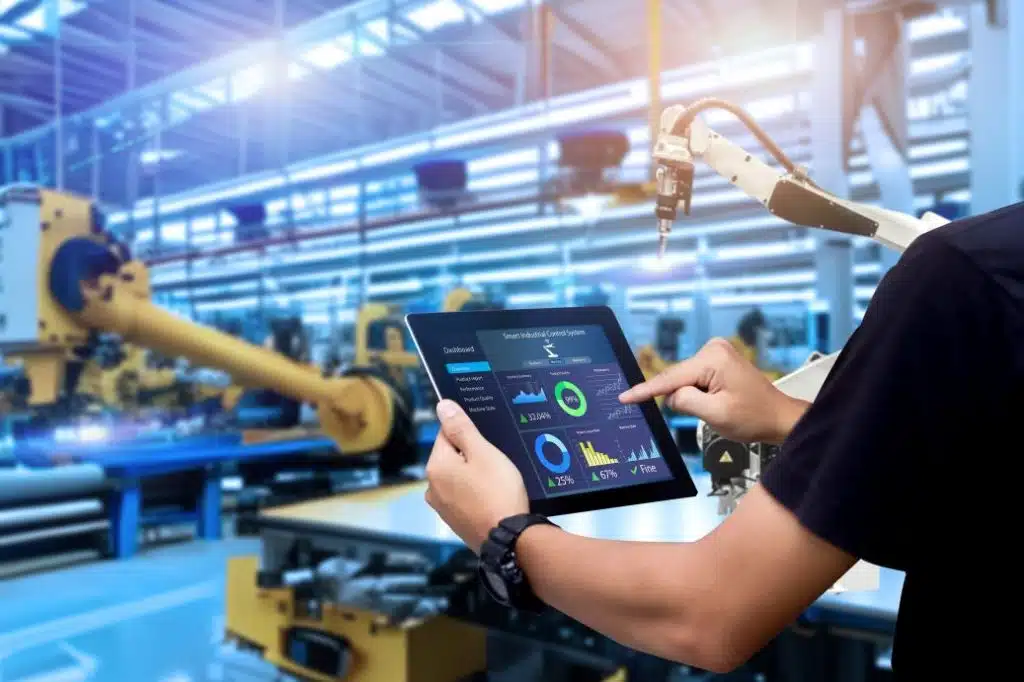
In the competitive world of modern manufacturing, success depends on how effectively a company can collect, analyze, and act on its data. Every production line, machine, and process generates valuable information, but without proper tools to interpret it, that data remains unused potential. This is where Business Intelligence (BI) for manufacturing comes into play. BI empowers manufacturers to make smarter, faster, and more strategic decisions, transforming operations, improving efficiency, and driving innovation across every level of production.
- What Is Business Intelligence in Manufacturing?
- The Importance of BI in Modern Manufacturing
- Key Benefits of Business Intelligence for Manufacturing
- 1. Improved Production Efficiency
- 2. Better Quality Control
- 3. Streamlined Supply Chain Management
- 4. Cost Reduction and Waste Minimization
- 5. Enhanced Decision-Making
- 6. Predictive Maintenance
- 7. Workforce Optimization
- How Business Intelligence Works in Manufacturing
- Applications of BI in the Manufacturing Industry
- 1. Production Performance Monitoring
- 2. Inventory and Demand Forecasting
- 3. Procurement and Supplier Management
- 4. Financial Analysis
- 5. Sustainability Tracking
- Challenges in Implementing BI for Manufacturing
- Choosing the Right BI Tool for Manufacturing
- Business Intelligence and the Future of Manufacturing
- Conclusion
- FAQs ;
What Is Business Intelligence in Manufacturing?
Business Intelligence (BI) refers to the use of data analysis tools and strategies to turn raw information into meaningful insights for better decision-making. In manufacturing, BI connects data from production systems, supply chains, inventory management, and quality control into one unified platform.
Instead of relying on guesswork or outdated spreadsheets, manufacturers use BI dashboards and reports to track performance, monitor productivity, reduce waste, and forecast future trends. In short, BI transforms complex factory data into clear, actionable knowledge.
The Importance of BI in Modern Manufacturing
Manufacturing has become increasingly digital and connected. Smart factories, sensors, and IoT devices generate massive amounts of real-time data every second. However, this data is only valuable if it’s analyzed and interpreted effectively.
Business Intelligence bridges this gap by providing:
-
Complete visibility across all manufacturing processes.
-
Accurate forecasting for supply and demand planning.
-
Data-driven decisions that enhance productivity and reduce operational costs.
-
Quick problem detection to minimize downtime.
As global competition increases and customer expectations evolve, the ability to harness data is no longer optional; it’s essential for survival and growth.
Key Benefits of Business Intelligence for Manufacturing
1. Improved Production Efficiency
BI systems monitor every stage of production in real time. Managers can identify bottlenecks, track machine performance, and predict maintenance needs before a breakdown occurs. This reduces downtime and ensures maximum output from all resources.
For example, if a machine starts underperforming, BI tools can immediately alert supervisors, helping them act before productivity drops.
2. Better Quality Control
Maintaining consistent quality is crucial in manufacturing. BI helps companies analyze production data to detect defects, variations, or quality issues early. By studying trends and root causes, manufacturers can improve their processes and ensure customers receive top-quality products every time.
3. Streamlined Supply Chain Management
A strong supply chain is the backbone of manufacturing. BI integrates data from suppliers, logistics partners, and inventory systems to provide a real-time view of the entire supply network. This helps in predicting shortages, avoiding overstocking, and ensuring smooth operations even during global disruptions.
4. Cost Reduction and Waste Minimization
Through data insights, manufacturers can identify areas of excessive spending or material wastage. BI tools help optimize resource usage, reduce scrap rates, and control energy consumption, leading to significant cost savings.
5. Enhanced Decision-Making
With BI dashboards, executives can access accurate, up-to-date reports instantly. This allows leaders to make strategic decisions based on facts—not assumptions. Whether it’s launching a new product line or expanding to new markets, BI ensures every move is backed by solid data.
6. Predictive Maintenance
Instead of reacting to machine failures, BI supports predictive maintenance, which uses data to forecast when equipment might fail. This proactive approach reduces repair costs and keeps production running smoothly without unexpected interruptions.
7. Workforce Optimization
BI helps managers analyze workforce productivity, shift performance, and labor costs. With this data, they can allocate tasks efficiently, ensure balanced workloads, and improve employee satisfaction through better planning.
How Business Intelligence Works in Manufacturing
To understand how BI operates in a manufacturing setup, let’s look at the process step-by-step:
-
Data Collection: Information is gathered from various sources such as ERP systems, sensors, CRM tools, and production software.
-
Data Integration: The data is combined into a centralized BI platform.
-
Analysis and Visualization: Advanced analytics tools process the data, creating reports and visual dashboards that show real-time performance.
-
Decision-Making: Managers use these insights to take quick, informed actions that improve operations and outcomes.
This continuous cycle ensures that every decision from the factory floor to the boardroom is based on reliable, up-to-date information.
Applications of BI in the Manufacturing Industry
1. Production Performance Monitoring
Manufacturers can measure output, efficiency, and defect rates across multiple facilities. BI tools present these figures in visual dashboards, making it easier to identify trends and areas for improvement.
2. Inventory and Demand Forecasting
BI platforms analyze sales history, market trends, and seasonal patterns to predict future demand accurately. This helps avoid overproduction or stock shortages, ensuring customers receive products on time.
3. Procurement and Supplier Management
BI enables procurement teams to evaluate supplier performance, pricing trends, and delivery times. Companies can use these insights to choose reliable suppliers and negotiate better contracts.
4. Financial Analysis
BI provides real-time financial data on production costs, profit margins, and return on investment. This helps CFOs and managers make smarter budgeting decisions.
5. Sustainability Tracking
As sustainability becomes a global priority, manufacturers use BI to track energy consumption, waste levels, and emissions. This helps meet environmental standards and reduce the company’s carbon footprint.
Challenges in Implementing BI for Manufacturing
While the advantages are clear, implementing BI is not without challenges. Common obstacles include:
-
Data Silos: Many manufacturers store data in separate systems that don’t communicate with each other.
-
High Initial Costs: Setting up BI platforms requires investment in technology and training.
-
Change Resistance: Employees may hesitate to adopt new digital tools.
-
Data Accuracy Issues: Without proper data governance, inaccurate information can lead to wrong conclusions.
To overcome these challenges, businesses must focus on building a data-driven culture, choosing the right BI software, and ensuring cross-departmental collaboration.
Choosing the Right BI Tool for Manufacturing
Selecting a suitable BI solution depends on the company’s size, goals, and existing technology. A few popular BI tools widely used in manufacturing include:
-
Microsoft Power BI – For interactive dashboards and strong data visualization.
-
Tableau – For detailed analytics and flexible reporting.
-
Qlik Sense – For real-time data integration and AI-driven insights.
-
Sisense – For embedding analytics into existing business systems.
When choosing a BI platform, consider scalability, data security, and ease of integration with current systems.
Business Intelligence and the Future of Manufacturing
The future of manufacturing lies in smart factories powered by automation, IoT, and data analytics. Business Intelligence will play a vital role in connecting these technologies, enabling factories to become fully data-driven.
With the rise of machine learning, BI will soon be able to predict not just what’s happening, but what’s about to happen. Manufacturers adopting BI today are setting themselves up for long-term success by combining human expertise with data intelligence.
Conclusion
Business Intelligence for manufacturing is transforming the way companies operate, innovate, and compete. By turning data into insights, BI empowers decision-makers to enhance production, minimize costs, and ensure consistent quality in a world where every second and every resource counts. Manufacturers that embrace BI are better equipped to stay ahead of market challenges and customer demands.
As the industry continues to evolve toward smart automation and digital transformation, Business Intelligence will remain at the heart of manufacturing excellence, driving efficiency, innovation, and growth at every level.
FAQs ;
-
What is Business Intelligence for Manufacturing?
It’s a data-driven approach that helps manufacturers improve productivity and decision-making. -
How does Business Intelligence for Manufacturing enhance efficiency?
It analyzes real-time data to optimize production and reduce operational waste. -
Why is Business Intelligence for Manufacturing important today?
Because it enables smarter decisions and boosts competitiveness in the modern industry. -
Can Small Factories Utilize Business Intelligence for Manufacturing?
Yes, it’s scalable and suitable for both small and large manufacturing setups. -
What results can companies expect from Business Intelligence for Manufacturing?
Improved quality, lower costs, faster delivery, and higher overall performance.